
That Frustrating Reverse: What's Really Going On
You press the button on your garage door remote. The door starts its descent, gets halfway down — or maybe almost all the way — and then suddenly reverses direction and goes right back up. You try again. Same thing. Maybe it works on the third attempt, maybe it doesn't.
This is one of the most common garage door complaints we hear from homeowners in Ponte Vedra Beach, and it's more than just an annoyance. A door that won't fully close leaves your home, vehicles, and belongings exposed to theft, weather, and wildlife. The good news is that the cause is usually identifiable and fixable — once you know where to look.
Understanding Your Garage Door's Safety System
Before we get into specific causes, it helps to understand why your garage door is designed to reverse in the first place. Since 1993, federal law has required all garage door openers to include an auto-reverse mechanism. This safety feature prevents the heavy door — which can weigh anywhere from 130 to over 400 pounds — from closing on a person, pet, or object.
Your opener uses two primary methods to detect obstructions:
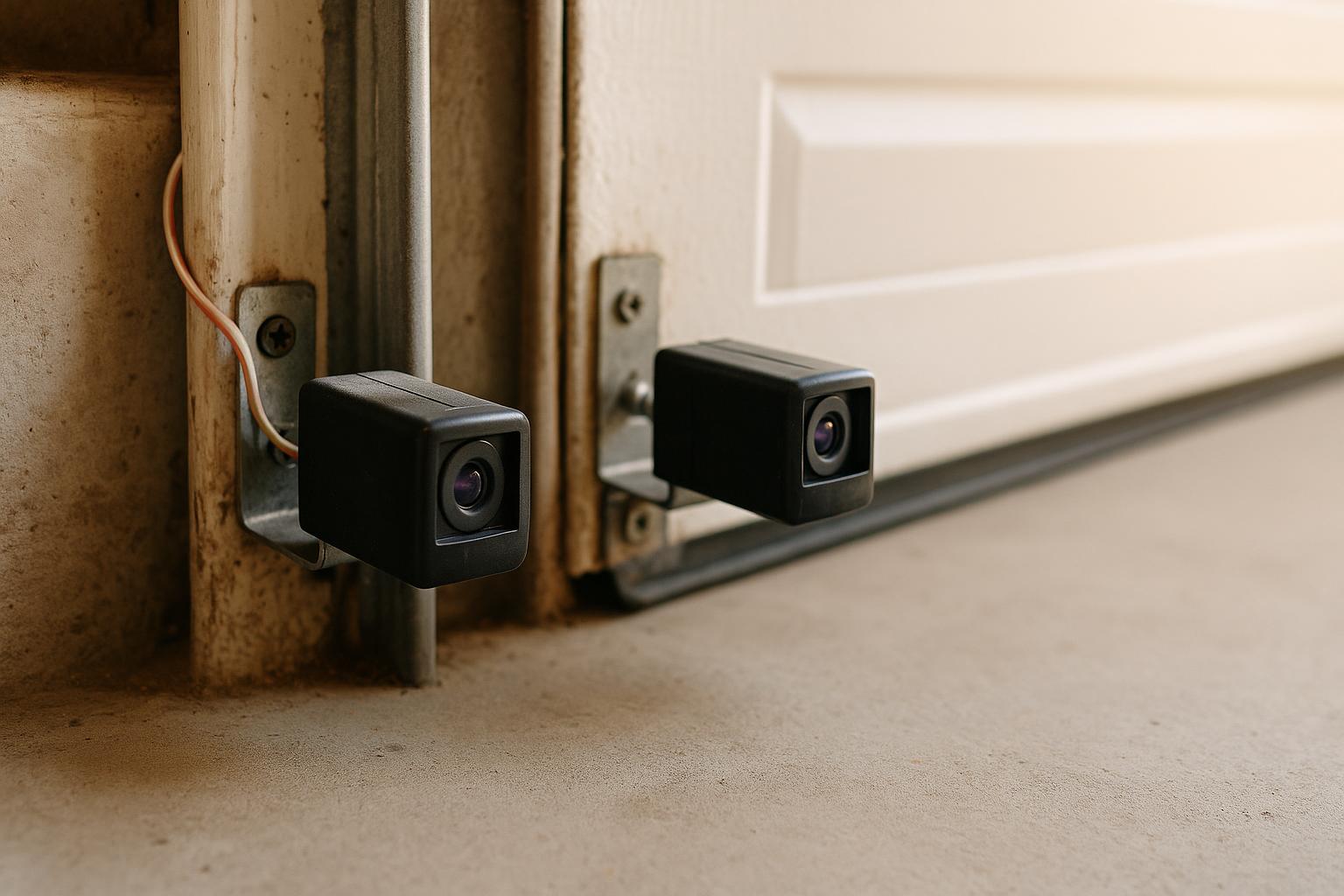
- Photo-eye sensors: Two small sensors mounted near the floor on either side of the door opening. They project an invisible infrared beam across the doorway. If anything breaks that beam, the door reverses.
- Mechanical auto-reverse: If the door physically contacts an object while closing, a pressure sensor triggers the reversal.
Both systems are critical for safety, but when they malfunction, they can cause your door to reverse even when nothing is actually in the way.
The Most Common Causes of Unwanted Reversals
1. Misaligned Photo-Eye Sensors
This is the number one culprit. The photo-eye sensors on either side of your garage door opening need to be precisely aligned to maintain their infrared connection. Over time, they can get bumped by a bicycle, nudged by a lawnmower, or simply shift due to vibration. Even a fraction of an inch of misalignment can break the beam and trick the opener into thinking something is blocking the door.
Check whether the small LED lights on each sensor are steady. A blinking light usually indicates misalignment or a wiring issue. In many cases, gently adjusting the sensor bracket by hand can restore alignment. However, if the brackets are loose or damaged, they may need to be replaced.
2. Dirty or Obstructed Sensor Lenses
Living near the coast in Ponte Vedra Beach means dealing with salt air, humidity, sand, and the occasional mud dauber wasp nest. All of these can coat or obstruct your sensor lenses. A simple wipe with a soft cloth can sometimes solve the problem instantly. We recommend checking your sensors every couple of months, especially after storms.
3. Incorrect Close-Limit Settings
Your garage door opener has adjustable limit settings that tell the motor exactly how far the door should travel when opening and closing. If the close-limit is set too far, the door hits the ground and keeps trying to push down. The opener interprets this resistance as an obstruction and reverses the door.
Adjusting limit settings typically involves turning a small screw or dial on the opener unit. Your owner's manual will have specific instructions, but if you're unsure, it's best to have a technician handle it. Setting the limits incorrectly can compromise the auto-reverse safety feature.
4. Worn or Damaged Rollers and Tracks
When rollers wear out or tracks become bent, the door encounters extra friction as it moves. This added resistance can trigger the opener's force sensor, causing a reversal. You might also notice grinding, squealing, or jerky movement as the door operates.
Inspect your tracks for visible dents, bends, or debris. Look at the rollers to see if they're cracked, chipped, or no longer spinning freely. Nylon rollers tend to last longer and operate more quietly than steel ones, and they're a popular upgrade among homeowners in our area.
5. Broken or Weakening Springs
Your garage door springs do the heavy lifting — literally. They counterbalance the weight of the door so the opener motor doesn't have to work as hard. When springs weaken or break, the door becomes significantly heavier for the opener to move. The motor strains, detects excessive force, and reverses.
If you suspect a spring issue, do not attempt to repair or replace springs yourself. Garage door springs are under extreme tension and can cause serious injury. This is a job for a trained technician with the right tools and experience.
6. Wiring Problems
Corroded, frayed, or loose wiring between the sensors and the opener can send intermittent or false signals. Coastal humidity and salt air in the Ponte Vedra Beach area can accelerate wire corrosion, particularly at connection points and staple locations along the wall.
Quick Troubleshooting Checklist
Before calling a professional, try these safe and simple steps:
- Look for any obvious obstructions in the door's path, including small objects on the garage floor near the sensors.
- Clean both photo-eye sensor lenses with a soft, dry cloth.
- Check that both sensor indicator lights are steady and not blinking.
- Gently adjust the sensors so they face each other directly.
- Inspect the tracks for debris, dents, or buildup.
- Listen for unusual sounds like grinding, popping, or straining during operation.
If none of these steps resolve the issue, the problem likely involves limit adjustments, spring tension, opener mechanics, or wiring — all of which are best handled by a professional.
When to Call a Professional
Some garage door issues are straightforward enough for a handy homeowner to address. But if your door continues to reverse after basic troubleshooting, or if you notice any of the following, it's time to bring in an expert:
- A spring appears broken or stretched
- The door is visibly crooked or sagging on one side
- The opener motor runs but the door doesn't move
- You smell burning or see sparks from the opener unit
- The reversal happens inconsistently, making the cause hard to pinpoint
At Precision Garage Door of Ponte Vedra Beach, we diagnose reversal issues every week. Our technicians arrive on time, explain exactly what's wrong, and provide upfront pricing before any work begins. Whether it's a simple sensor realignment or a full spring replacement, we fix it right the first time so you can stop fighting with your remote.
Prevention Goes a Long Way
Most reversal problems are preventable with routine maintenance. An annual or semi-annual inspection that includes lubricating moving parts, testing the balance and auto-reverse function, tightening hardware, and checking sensor alignment can catch small issues before they turn into daily frustrations.
If your garage door has been giving you trouble, don't ignore it. A door that won't close properly is a security risk, an energy waste, and a headache you don't need. Reach out to our team serving Ponte Vedra Beach, Nocatee, Jacksonville Beach, and the surrounding communities — we'll get your door working the way it should.