
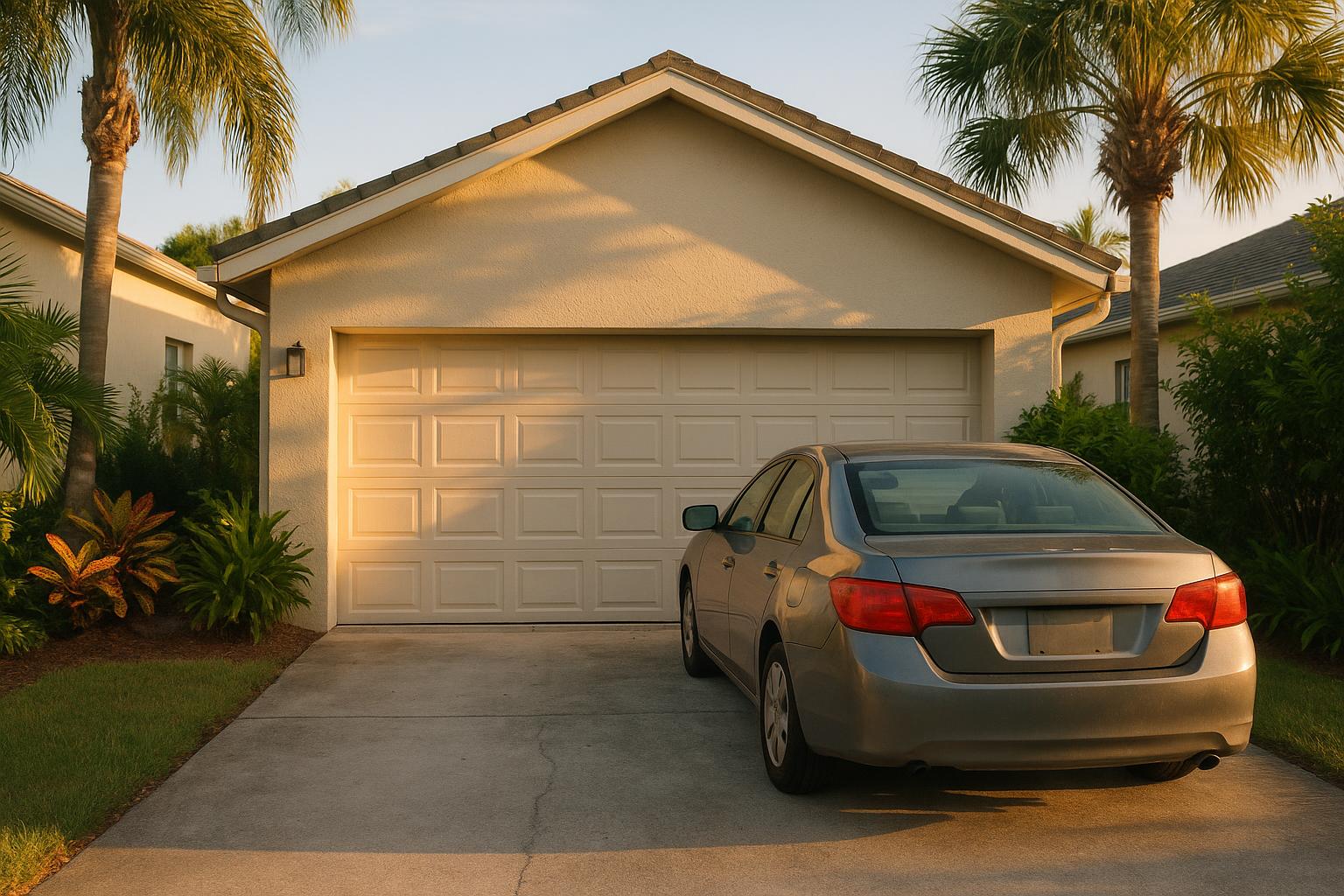
You're Running Late and Your Garage Door Won't Budge
It's 7:15 a.m. You've got your coffee, your keys, and exactly enough time to make it to work. You press the garage door opener button and… nothing. Or maybe the motor hums but the door doesn't move. Or it lifts two inches and drops back down.
Few household problems are as immediately disruptive as a garage door that won't open. For most homeowners in Ponte Vedra Beach, the garage is the primary way in and out of the house. When it fails, you're stuck — literally.
Before you panic or try to force the door open, take a breath. Most causes of a non-opening garage door are identifiable and fixable. Here's a walkthrough of the most common reasons your garage door won't cooperate and what you should do about each one.
1. Dead Remote Batteries or a Faulty Wall Switch
It sounds almost too simple, but this is one of the most common reasons a garage door appears to stop working. Remote batteries typically last one to two years, and they tend to die without warning.
What to check:
- Replace the batteries in your remote and try again.
- Try the wall-mounted button inside the garage. If the wall switch works but the remote doesn't, the issue is the remote — not the door.
- If neither the remote nor the wall switch activates the opener, the problem is likely with the opener unit itself or the power supply.
2. The Opener Is Unplugged or Has No Power
Power outages, tripped breakers, and accidentally unplugged cords happen more often than you'd think. A storm the night before, a tripped GFCI outlet, or someone bumping the cord while grabbing something off a shelf can all cut power to your opener.
What to check:
- Make sure the opener is plugged in securely.
- Check your electrical panel for a tripped breaker.
- If the opener is connected to a GFCI outlet, press the reset button on the outlet.
3. The Door Is Locked — Manually
Many garage doors have a manual lock built into the handle or a slide lock along the track. If someone engaged the lock — or if it slipped into the locked position on its own — the opener motor will strain against a door that physically cannot move.
What to check:
- Look at the interior side of the door for a horizontal locking bar that slides into the track.
- Disengage the lock and try the opener again.
- If the lock is engaging on its own, the mechanism may need adjustment or replacement.
4. Broken Torsion Springs
This is the big one. Your garage door's torsion springs do the heavy lifting — literally. They counterbalance the weight of the door so the opener motor doesn't have to do all the work. When a spring breaks, the door becomes far too heavy for the opener to lift.
Signs of a broken spring:
- You heard a loud bang from the garage — often described as sounding like a gunshot
- There's a visible gap in the spring mounted above the door
- The door lifts a few inches and then stops, or the opener motor runs but the door barely moves
Important: Do not attempt to open the door manually or replace springs yourself. Torsion springs are under extreme tension and can cause serious injury. This is a job for a trained technician.
5. Snapped or Jumped Cables
The lift cables on either side of your garage door work in tandem with the springs to raise and lower the door evenly. If a cable snaps or comes off its drum, the door may jam, open unevenly, or refuse to move at all.
What to look for:
- A loose cable hanging near the bottom bracket of the door
- The door appears crooked or tilted when you try to open it
Like springs, cables are under significant tension. If you see a broken or loose cable, call a professional rather than trying to reattach it yourself.
6. Misaligned or Obstructed Safety Sensors
Every modern garage door opener has photoelectric safety sensors near the bottom of the door tracks. If these sensors are misaligned, dirty, or blocked by something — a broom, a trash can, a cobweb — the opener may refuse to operate or may only work intermittently.
What to check:
- Make sure nothing is sitting in front of or between the sensors.
- Clean the sensor lenses with a soft cloth.
- Check that both sensors have steady indicator lights. A blinking light usually means they're out of alignment.
- Gently adjust the sensors until both lights are solid.
7. The Disconnect Switch Was Engaged
Your garage door opener has an emergency release cord — usually a red handle hanging from the track rail. Pulling this cord disconnects the door from the opener so you can operate it manually during a power outage. If someone pulled this cord and didn't re-engage it, the opener motor will run but the door won't move with it.
How to fix it:
- Pull the emergency release cord back toward the opener motor.
- Manually move the door until the trolley reconnects with the opener carriage. You'll usually hear a click.
- Test the opener to confirm the door is tracking with the motor again.
8. Worn Gears Inside the Opener
If your opener motor runs and you can hear it humming or grinding, but the door doesn't move and the disconnect isn't engaged, the internal gears may be stripped. This is common in older belt-drive and chain-drive openers, especially units that are 10 to 15 years old.
A technician can replace the gear assembly without replacing the entire opener in most cases, which is a more cost-effective repair than buying a new unit.
When to Call a Professional
Some of the fixes above — replacing remote batteries, cleaning sensors, checking the power supply — are safe and simple for any homeowner. But anything involving springs, cables, or internal opener components should be handled by a trained garage door technician.
At Precision Garage Door of Ponte Vedra Beach, we see these calls every week. Most of the time, we can diagnose the problem quickly and complete the repair in a single visit. We serve homeowners throughout Ponte Vedra Beach, Nocatee, Jacksonville Beach, and the surrounding communities, and we understand that a garage door that won't open isn't something that can wait until next week.
A Few Things You Can Do Right Now
If your garage door is working fine today, here are a few things worth doing to reduce the chances of a surprise failure tomorrow:
- Test your opener monthly. Press the button and watch the door travel. Listen for unusual sounds and watch for hesitation or jerky movement.
- Inspect your springs and cables visually. Look for rust, fraying, or gaps. You don't need to touch them — just look.
- Keep your sensors clean and make sure nothing is stored near them.
- Replace remote batteries proactively once a year rather than waiting for them to die at the worst possible moment.
- Schedule preventive maintenance annually. A professional tune-up catches small problems before they leave you stranded in your garage on a Monday morning.
Your garage door is the largest moving part of your home. A little attention goes a long way toward keeping it reliable — especially in a coastal environment like Ponte Vedra Beach, where heat, humidity, and salt air accelerate wear on every component.