
Your Garage Door Shouldn't Sound Like That
You press the button on your remote, and instead of a smooth, quiet operation, your garage door greets you with a symphony of grinding, squealing, or banging. If you're a homeowner in Ponte Vedra Beach, you've probably learned to tune it out — but those strange noises aren't just annoying. They're warning signs that something is wearing out, misaligned, or about to fail.
The good news is that most garage door noises point to identifiable, fixable problems. The key is knowing what each sound means so you can address it before a minor issue turns into a major repair. Let's break down the most common garage door noises and what they're really telling you.
Squealing or Screeching Sounds
A high-pitched squeal when your garage door opens or closes is one of the most common complaints we hear from homeowners. This sound typically points to one of two issues:
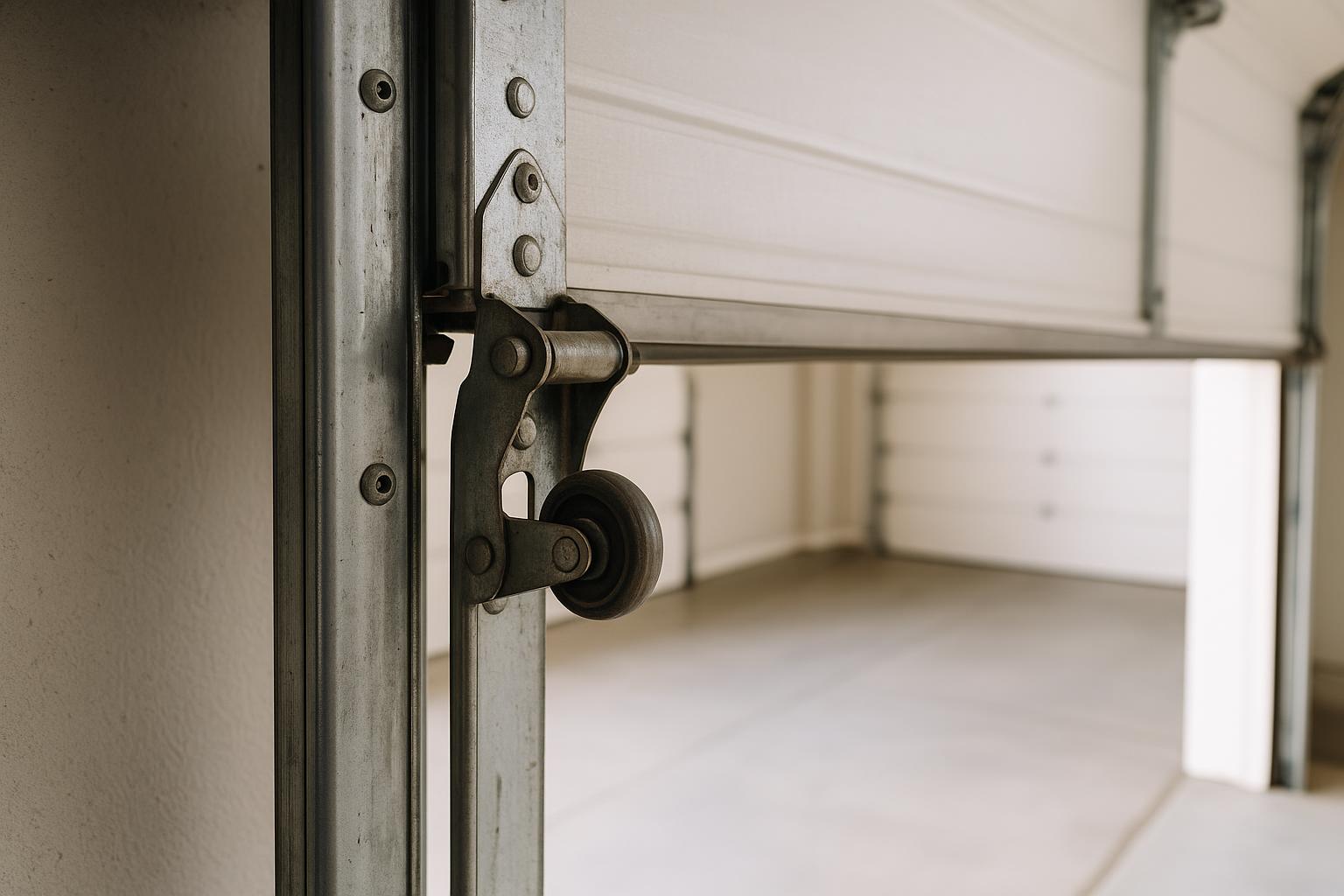
- Dry or worn rollers: Your garage door rides on rollers that travel along metal tracks. Over time, these rollers lose lubrication or wear down, creating metal-on-metal friction that produces that unmistakable screech. Nylon rollers tend to be quieter and last longer than steel ones, but even they wear out eventually.
- Lack of lubrication: Hinges, bearings, and the torsion spring system all need periodic lubrication to operate smoothly. In Ponte Vedra Beach, the combination of humidity and salt air can accelerate the breakdown of lubricants, meaning your door may need attention more frequently than homes further inland.
A simple application of garage door-specific lubricant can sometimes solve the problem immediately. However, if the rollers are visibly cracked, chipped, or wobbling in the track, they need to be replaced.
Grinding or Scraping Noises
A grinding sound is harder to ignore — and for good reason. This noise usually means something is rubbing where it shouldn't be. Common causes include:
- Misaligned tracks: The vertical and horizontal tracks that guide your door need to be precisely aligned. Even a small shift can cause the door to scrape against the track as it moves, creating a grinding noise and accelerating wear on both the track and the rollers.
- Bent track sections: A bump from a car, a fallen object, or even gradual settling of your garage structure can bend a section of track. When the door hits that bent area, it grinds and struggles to pass through.
- Worn gear in the opener: If the grinding seems to come from the ceiling-mounted opener unit rather than the door itself, the internal gear assembly may be stripped or wearing out. This is especially common in older chain-drive openers.
Track and roller issues should be inspected by a professional. Attempting to adjust garage door tracks without proper tools and training can be dangerous and may void your warranty.
Banging or Popping Sounds
A loud bang or pop during operation can be startling, and it usually signals a more urgent issue:
- Torsion spring problems: The torsion springs above your garage door are under tremendous tension. As they age, they can shift on the shaft or develop weak spots that cause sudden popping sounds during operation. A loud single bang when you're not using the door could mean a spring has snapped entirely.
- Loose hardware: Over thousands of open-and-close cycles, nuts, bolts, and brackets can vibrate loose. A banging sound may simply be a loose bracket rattling against the door or wall.
- Panel or hinge issues: Worn hinges can cause sections of the door to jerk rather than glide, producing a banging sound at specific points during travel.
If you suspect a spring problem, do not attempt to repair it yourself. Torsion springs store enough energy to cause serious injury. This is always a job for a trained technician.
Rattling or Vibrating Sounds
A persistent rattle during operation is often the least serious noise on this list, but it's still worth addressing. Common culprits include:
- Loose chain or belt: If your opener uses a chain drive, a loose chain will slap and rattle during operation. Belt-drive openers can develop a similar issue if the belt stretches over time.
- Loose mounting hardware: The opener itself is bolted to your ceiling or garage framing. If those mounts loosen, the entire unit can vibrate and rattle with each cycle.
- Worn insulation or weatherstripping: Loose or deteriorating weatherstripping along the sides or bottom of your door can flap and vibrate, creating a rattling noise that sounds worse than it is.
Tightening hardware and adjusting chain tension are relatively straightforward tasks, but if you're unsure about what's causing the rattle, a quick inspection can pinpoint the problem before it escalates.
When Noise Means It's Time for Preventive Maintenance
Here's the reality: most garage door noises don't appear overnight. They build gradually as parts wear, lubricant dries out, and hardware loosens over thousands of cycles. By the time a noise is loud enough to bother you, the underlying issue has usually been developing for weeks or months.
That's why we recommend annual preventive maintenance for homeowners in Ponte Vedra Beach and the surrounding communities like Nocatee, Jacksonville Beach, and Neptune Beach. A maintenance visit includes lubrication of all moving parts, inspection of springs and cables, tightening of hardware, track alignment checks, and a full safety test of your opener's auto-reverse features.
Regular maintenance doesn't just keep your door quiet — it extends the life of every component, helps you avoid emergency repairs, and keeps your family safe.
Don't Ignore What Your Garage Door Is Telling You
Your garage door is the largest moving part of your home, and it works hard — most families open and close it at least four times a day. That adds up to well over a thousand cycles per year. Every noise is a clue about the condition of your door's mechanical system.
Some sounds can be resolved with a can of lubricant and a socket wrench. Others require professional diagnosis and repair. The important thing is not to ignore them. A noise that seems minor today can lead to a door that won't open tomorrow — or worse, a door that comes crashing down unexpectedly.
If your garage door has started making sounds that weren't there before, the team at Precision Garage Door of Ponte Vedra Beach is here to help. We'll diagnose the problem, explain your options honestly, and get your door running smoothly and quietly again.