
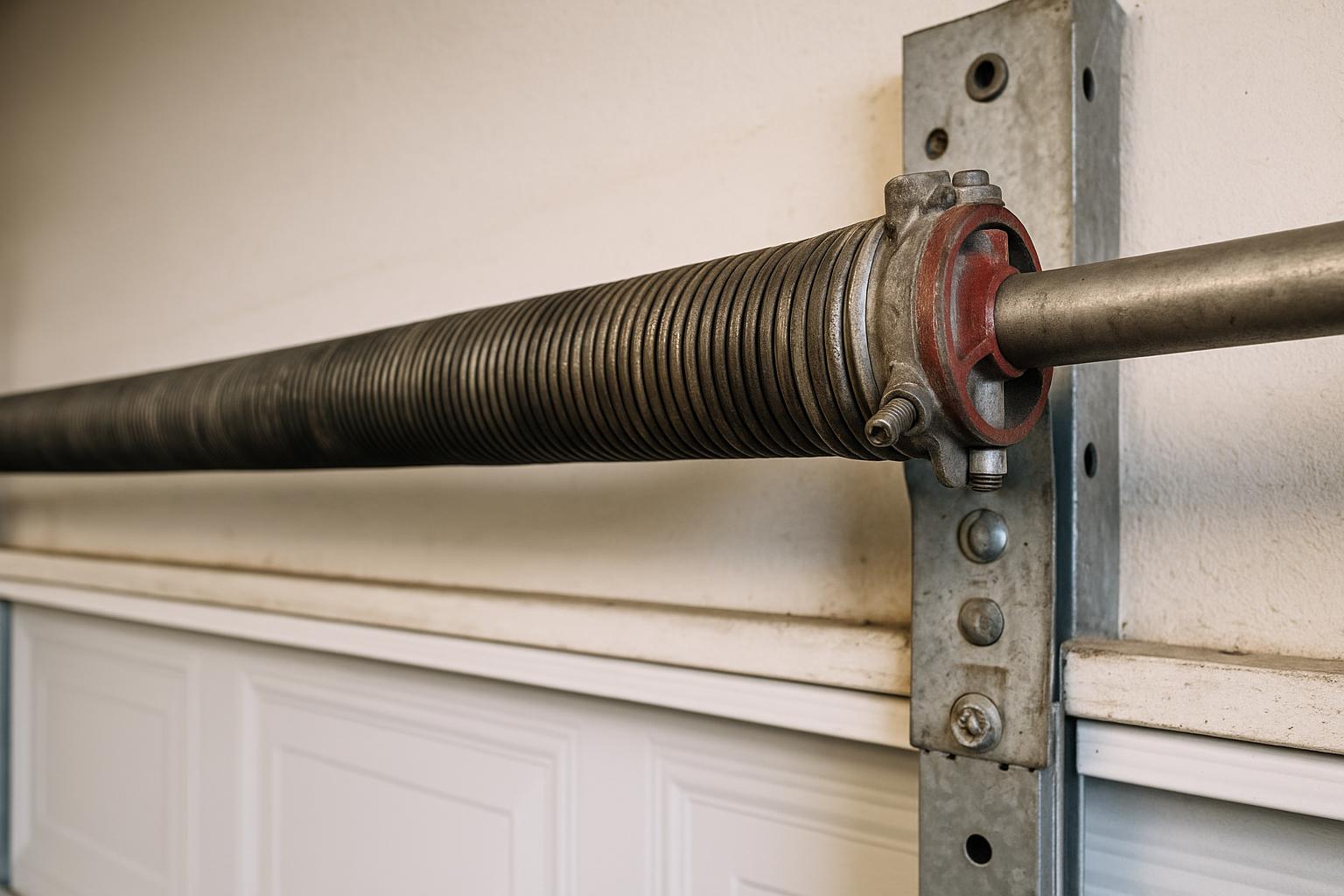
Your Garage Door Springs Are Doing More Work Than You Think
Most homeowners in Ponte Vedra Beach open and close their garage doors multiple times a day without giving it a second thought. But behind that smooth, effortless motion is a set of tightly wound springs doing the heavy lifting — literally. Your garage door springs counterbalance the full weight of the door, which can range from 130 to over 300 pounds depending on the material and size.
When those springs start to wear out or break, your garage door becomes difficult to operate, potentially dangerous, and completely unreliable. The good news is that springs rarely fail without warning. If you know what to look for, you can catch the problem early and schedule a replacement before you're stuck with a door that won't budge.
How Long Do Garage Door Springs Last?
Most standard torsion springs are rated for approximately 10,000 cycles. One cycle equals one full open-and-close of the door. If your household opens the garage door four times a day, that works out to roughly seven years of use before the springs reach the end of their expected lifespan.
Several factors can shorten that lifespan, especially here along the coast:
- Humidity and salt air — Ponte Vedra Beach's coastal environment accelerates corrosion on metal components, including springs.
- Lack of lubrication — Springs that aren't regularly lubricated develop more friction and wear out faster.
- Temperature fluctuations — Florida's heat combined with cooler nights causes metal to expand and contract, weakening springs over time.
- Heavy doors — Thicker insulated doors or solid wood doors put more strain on the spring system.
Warning Signs Your Springs Are Wearing Out
1. The Door Feels Heavier Than Usual
Try this simple test: pull the emergency release handle to disconnect the opener, then manually lift the door about halfway. A properly balanced door should stay in place on its own. If it feels extremely heavy or slides back down, your springs have lost tension and are no longer supporting the door's weight effectively.
2. The Door Opens Unevenly or Crooked
If your garage door tilts to one side as it opens, one of your extension springs may be weaker than the other — or it may have already broken. A crooked door puts stress on the tracks, rollers, and opener, which can lead to a cascade of additional problems if left unaddressed.
3. You Hear a Loud Bang From the Garage
A broken torsion spring releases its stored energy all at once, producing a loud bang that many homeowners mistake for something falling or even a break-in. If you heard a sudden loud noise from your garage and now the door won't open, a broken spring is the most likely culprit.
4. There's a Visible Gap in the Spring
Take a look at the torsion spring mounted above your garage door. An intact spring is a continuous, tightly wound coil. If you see a gap of an inch or two somewhere along the coil, the spring has snapped and needs to be replaced immediately.
5. The Opener Struggles or Stops Mid-Cycle
Your garage door opener is designed to lift a balanced door, not to do all the heavy lifting on its own. When springs lose tension or break, the opener has to work much harder. You might notice it straining, moving the door more slowly, or stopping partway through the cycle. Continuing to use the opener in this condition can burn out the motor.
6. Cables Are Loose or Hanging
The lift cables on either side of your garage door work in tandem with the springs. When a spring breaks, the cables often go slack or come off the drums entirely. Loose cables are a clear sign that something has gone wrong with the spring system.
Why You Should Never Replace Springs Yourself
We understand the DIY spirit — many Ponte Vedra Beach homeowners are handy and capable. But garage door spring replacement is one job that genuinely belongs to trained professionals. Here's why:
- Extreme tension — Torsion springs are wound under tremendous force. A spring that slips during installation can cause serious injury.
- Specialized tools required — Proper replacement requires winding bars, clamps, and precise calibration that most homeowners don't have.
- Matching the right spring — Springs must be matched to the exact weight and size of your door. The wrong spring will leave the door unbalanced and put stress on every other component.
- Warranty concerns — Improper installation can void warranties on both the springs and your garage door opener.
A professional technician can complete a spring replacement safely in about an hour, and the cost is far less than an emergency room visit or the damage caused by a botched installation.
Torsion Springs vs. Extension Springs
There are two main types of garage door springs, and knowing which type your door uses helps you understand the repair:
Torsion springs are mounted on a metal shaft above the garage door opening. They twist to store energy and are the more common type found in modern garage doors. They provide smoother, more controlled movement and tend to last longer.
Extension springs run along the horizontal tracks on either side of the door. They stretch and contract to lift the door. Extension springs are more common on older or lighter doors but are generally considered less safe because they can become projectiles if they break without safety cables.
If your home in Ponte Vedra Beach still has extension springs without safety cables, we strongly recommend upgrading to a torsion spring system or at the very least having safety cables installed.
How to Extend the Life of Your Springs
While no spring lasts forever, regular maintenance can help you get the most out of your current set:
- Lubricate the springs every three to four months — Use a silicone-based or white lithium garage door lubricant. This reduces friction and helps prevent rust, which is especially important in our humid coastal climate.
- Schedule annual maintenance — A professional tune-up includes checking spring tension, inspecting cables, lubricating moving parts, and testing the door's balance.
- Don't ignore small problems — A door that's slightly off-balance or making unusual noises is telling you something. Addressing minor issues early prevents them from becoming major repairs.
- Consider high-cycle springs — If you use your garage door frequently, upgrading to springs rated for 25,000 or even 50,000 cycles can save you from dealing with replacements every few years.
When It's Time, Call a Local Team You Can Trust
If you've noticed any of the warning signs above, don't wait for a complete failure. A broken spring at the worst possible moment — when you're heading to work, picking up the kids, or trying to secure your home before a storm — is a situation no one wants to deal with.
At Precision Garage Door of Ponte Vedra Beach, we carry a full inventory of springs on our trucks so most replacements can be completed in a single visit. We'll inspect your entire door system, explain exactly what needs to be done, and give you a clear price before any work begins. Whether you're in Nocatee, Jacksonville Beach, or right here in Ponte Vedra, we're just a phone call away.
Your garage door works hard for you every single day. Make sure the springs that power it are up to the job.