
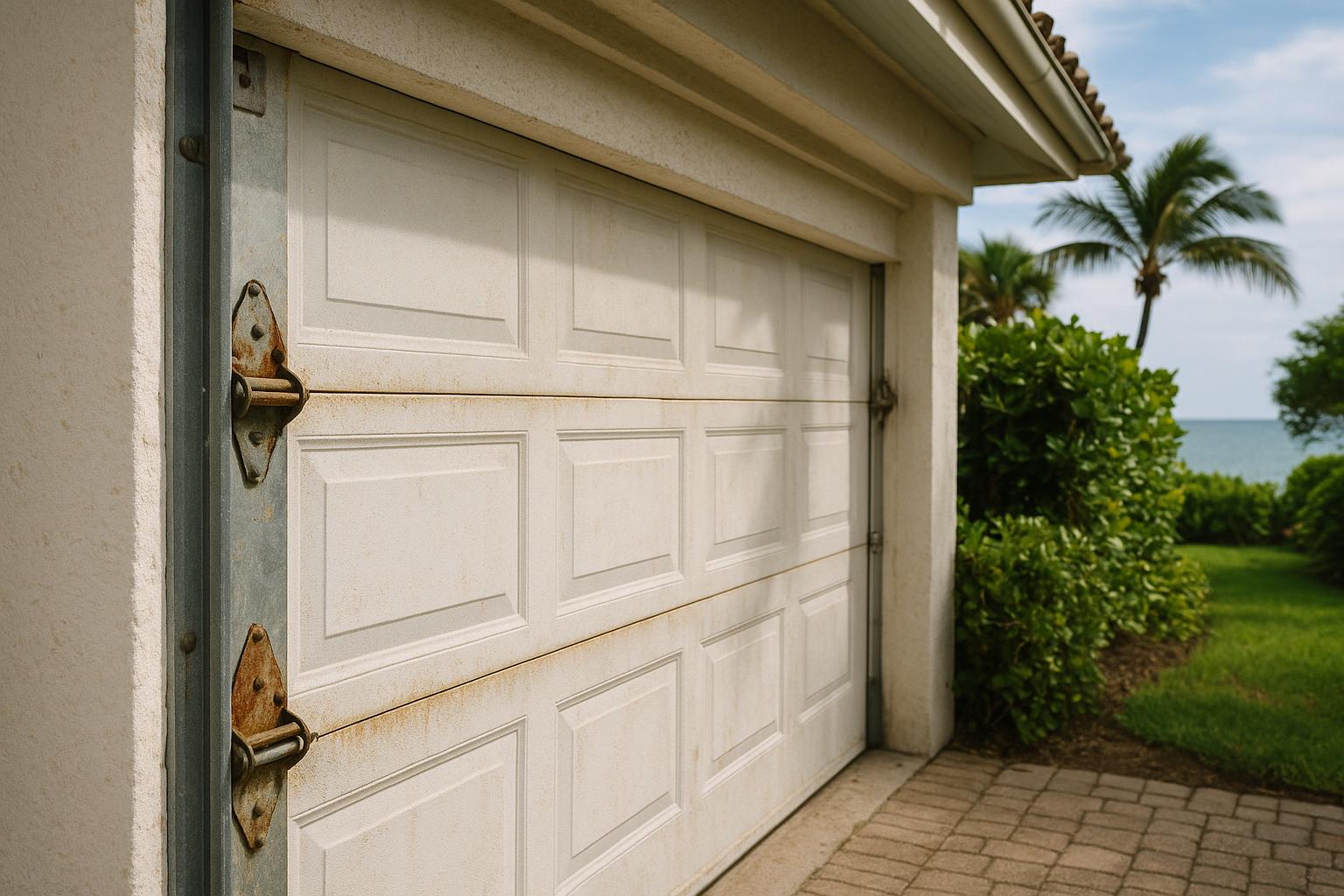
Coastal Living Is Beautiful — But Tough on Garage Doors
There's no question that living in Ponte Vedra Beach comes with incredible perks — ocean breezes, stunning sunrises, and a laid-back coastal lifestyle. But that same salty air that makes life here so enjoyable can quietly wreak havoc on your garage door system. From corroded springs to rusted tracks, salt air accelerates wear and tear in ways that homeowners farther inland rarely experience.
If you've noticed rust spots, squeaky operation, or hardware that seems to be aging faster than it should, the coastal environment is likely playing a role. The good news is that with the right knowledge and a little preventive care, you can keep your garage door functioning smoothly for years to come.
Why Salt Air Is So Damaging to Garage Doors
Salt air contains tiny particles of sodium chloride that settle on metal surfaces. When combined with the high humidity levels we experience here along the Northeast Florida coast, these particles create the perfect conditions for corrosion. Here's what happens:
- Oxidation accelerates: Salt acts as a catalyst for rust. Metal components like springs, hinges, tracks, and rollers begin to corrode much faster than they would in a dry, inland climate.
- Moisture gets trapped: Humidity keeps metal surfaces damp for longer periods, giving salt deposits more time to eat away at protective coatings.
- Lubricants break down faster: The combination of heat, humidity, and salt causes lubricants on moving parts to degrade more quickly, leading to increased friction and wear.
Over time, this cycle of corrosion and friction can lead to component failure — sometimes at the worst possible moment.
The Parts Most Vulnerable to Salt Air Damage
Torsion and Extension Springs
Your garage door springs do the heavy lifting every time the door opens and closes. They're typically made of steel, which is highly susceptible to rust. When springs corrode, they lose their tensile strength and become more likely to snap. A broken spring isn't just inconvenient — it can be dangerous. If you notice discoloration or flaking on your springs, it's time to have them inspected.
Tracks and Rollers
The metal tracks that guide your garage door and the rollers that ride along them are constantly exposed to the elements, especially if your garage faces the ocean or stays open frequently. Corroded tracks can cause the door to bind, jump off track, or operate unevenly. Nylon rollers hold up better than steel rollers in coastal environments, which is something worth considering if you're due for a replacement.
Hinges and Brackets
These smaller hardware components are easy to overlook, but they're just as vulnerable to corrosion. Rusty hinges can seize up, putting extra strain on your garage door opener and other parts of the system.
Garage Door Opener Chain or Screw Drive
If your opener uses a chain or screw drive mechanism, those metal components can also suffer from salt exposure. A corroded chain can stretch, skip, or break, while a rusty screw drive can grind and lose efficiency.
The Door Panels Themselves
Steel garage doors — the most common type in Ponte Vedra Beach — are finished with protective coatings, but those coatings can chip, scratch, or wear thin over time. Once the bare metal is exposed, rust sets in quickly. Even aluminum doors, while more resistant to rust, can develop oxidation and pitting from prolonged salt exposure.
How to Protect Your Garage Door from Coastal Corrosion
Rinse Your Door Regularly
One of the simplest and most effective things you can do is rinse your garage door and its hardware with fresh water every few weeks. This washes away salt deposits before they have a chance to cause damage. A garden hose is all you need — no pressure washer required. Pay attention to the tracks, springs, and hinges, not just the door panels.
Keep Moving Parts Lubricated
Apply a silicone-based or lithium-based garage door lubricant to your springs, rollers, hinges, and tracks every three to four months. In a coastal environment like ours, you may want to do this even more frequently. Proper lubrication creates a barrier against moisture and reduces the friction that accelerates wear.
Inspect for Rust and Address It Early
Walk around your garage door system every couple of months and look for early signs of rust — reddish-brown spots, flaking metal, or discoloration. Catching corrosion early gives you the chance to treat it with a rust inhibitor or replace a single component before the problem spreads to other parts of the system.
Touch Up Paint and Coatings
If you spot chips or scratches on your steel garage door panels, touch them up with a rust-resistant primer and exterior paint. This small effort can prevent a minor cosmetic issue from turning into a structural problem.
Choose Corrosion-Resistant Materials
If you're installing a new garage door or replacing components, talk to your technician about materials designed for coastal environments. Galvanized or stainless steel hardware, nylon rollers, and fiberglass or composite door panels all offer better resistance to salt air than standard options.
Schedule Preventive Maintenance
A professional maintenance visit once or twice a year can make a significant difference in the lifespan of your garage door. During a preventive maintenance appointment, a technician will inspect every component, lubricate moving parts, tighten hardware, test the balance of the door, and identify any early signs of corrosion or wear. For homeowners in Ponte Vedra Beach and nearby communities like Nocatee, Jacksonville Beach, and Neptune Beach, this kind of proactive care is especially valuable given the coastal conditions.
When to Call a Professional
Some garage door issues caused by salt air damage are easy to spot but should only be handled by a trained technician. You should call a professional if you notice:
- Visible rust or corrosion on your torsion or extension springs
- The door feels heavier than usual or is difficult to lift manually
- Grinding, scraping, or popping noises during operation
- The door is off track or moving unevenly
- Your garage door opener is straining or cycling inconsistently
Attempting to repair or replace springs, tracks, or opener mechanisms without the right tools and training can result in serious injury. A qualified garage door technician can assess the damage, recommend the right fix, and ensure everything is safe and functioning properly.
Don't Let the Salt Air Win
Your garage door is one of the largest moving parts of your home, and in a coastal community like Ponte Vedra Beach, it needs a little extra attention. By staying on top of maintenance, rinsing away salt deposits, and addressing corrosion early, you can avoid costly repairs and keep your door operating safely for years.
At Precision Garage Door of Ponte Vedra Beach, we understand the unique challenges that come with living along the coast. Whether you need a tune-up, a repair, or advice on upgrading to more corrosion-resistant components, we're here to help. Give us a call to schedule a maintenance visit or inspection — we'll show up on time and give you an honest assessment of your door's condition.